


E-911 Communications
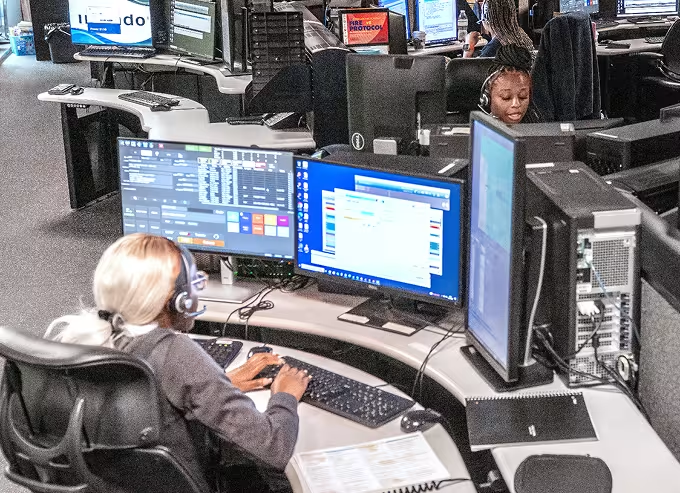
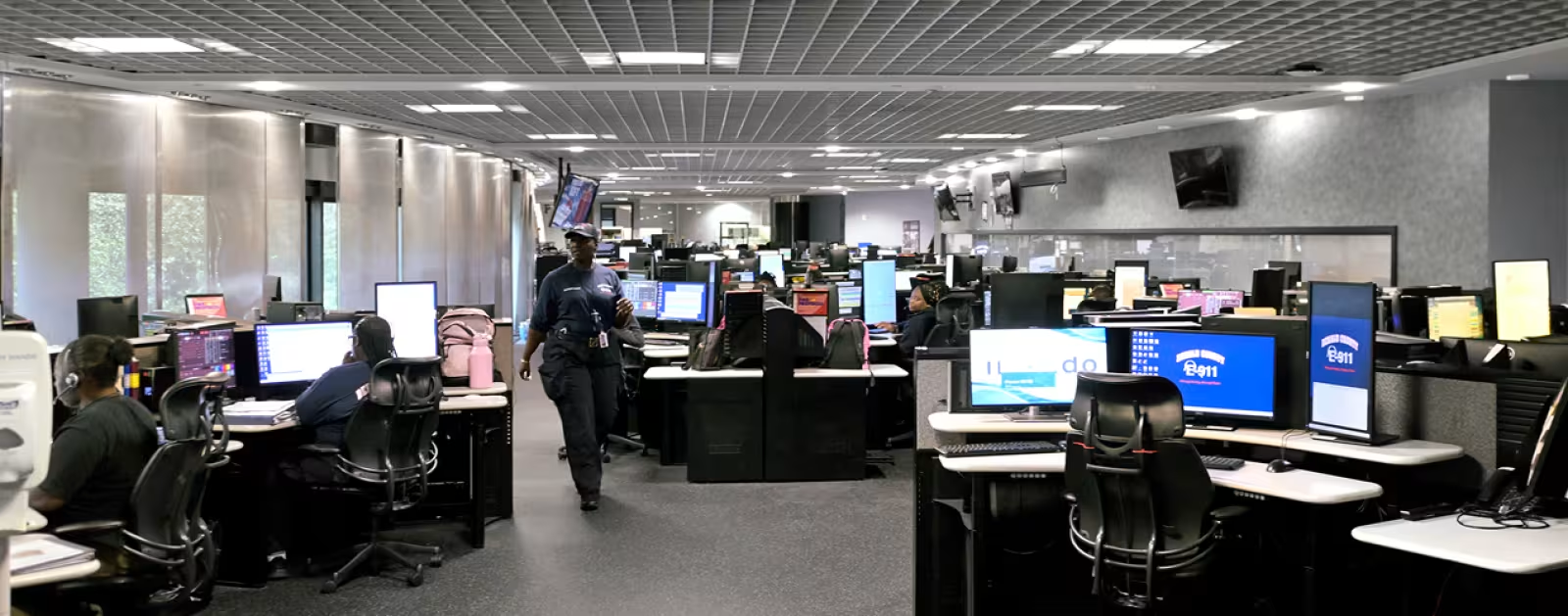
DeKalb County’s E-911 Communications Center serves as the critical first link in emergency response, connecting residents, visitors, and first responders with timely, accurate, and life-saving support.
Our team of trained communications professionals answers emergency and non-emergency calls, dispatches police, fire, and EMS services, and ensures help is on the way when it matters most. We are committed to delivering reliable, efficient service that keeps our community informed, protected, and safe.
Our Mission
DeKalb County E-911 Communications is committed to delivering effective and efficient police, fire, and emergency medical services through teamwork, training, and cutting-edge technology.
One DeKalb. One Mission. One Future.
Emergency Services | 24/7 Dispatch
- FOR LIFE-THREATENING EMERGENCIES: CALL 9-1-1
- Non-Emergency Services: 678-406-7929
- General County Information: Call 3-1-1
Leadership Team
- Director: Carina Swain
- Deputy Director: Ingrid McNeely
- Operations Manager: Tameka Minter
- Technical Manager: Danny A. Johns
- Radio System Administrator: Darryl J. Scott
About DeKalb County E-911 Center
DeKalb County E-911 serves as the Public Safety Answering Point (PSAP) for unincorporated DeKalb County and most cities within the county. Our center holds the prestigious Accredited Center of Excellence (ACE) designation from the International Academies of Emergency Dispatch.
Full Dispatch Service Area
- All unincorporated DeKalb County areas
- Avondale Estates
- Clarkston
- Lithonia
- Pine Lake
- Stone Mountain
- Stonecrest
- Tucker
Fire-Rescue Dispatch Service Area
- Brookhaven
- Chamblee
- Decatur (rescue only)
- Doraville
- Dunwoody
- Atlanta (DeKalb County portions - rescue services)
Facts By the Numbers
- More than 1 million calls handled annually
- 800,000+ emergency 9-1-1 calls per year
- 24/7/365 operations with four rotating teams
- 130+ professional staff members on 12-hour shifts
- Accredited Center of Excellence status
Emergency Services We Coordinate
- Police Department Response
- Fire-Rescue Services
- Emergency Medical Services (EMS)
- Sheriff's Department Dispatch
- Animal Services (after hours and weekends)
When to Call 9-1-1 Immediately
Medical Emergencies:
- Difficulty breathing or not breathing
- Unconsciousness or unresponsiveness
- Severe bleeding that won't stop
- Chest pain or heart attack symptoms
- Stroke symptoms (numbness, confusion, difficulty speaking)
- Severe burns larger than your palm
- Electrical burns or lightning strikes
- Severe allergic reactions
- Seizures or convulsions
- Choking (unable to clear airway)
Other Life-Threatening Situations:
- Crimes in progress
- Serious vehicle accidents with injuries
- Structure fires
- Any situation where someone's life is in immediate danger
9-1-1 from Cell Phones
Important Cell Phone Guidelines
- Your exact location is not automatically known
- Clearly state your address and nearest cross streets
- Stay on the line until dismissed by the dispatcher
- Keep your phone on for potential callbacks
- Be patient if transferred to another agency
- Lock your keypad to prevent accidental 9-1-1 calls
Texting to 9-1-1 Service
When to Text 9-1-1:
- You are deaf, hard of hearing, or have speech disabilities
- Speaking aloud would put you in danger
- Medical emergency prevents you from speaking
How to Text 9-1-1:
- Enter "911" in the recipient field
- Include your location and type of emergency needed (police, fire, ambulance)
- Use simple language - no abbreviations, emojis, or slang
- Keep messages under 160 characters
- Follow dispatcher instructions
Texting 9-1-1 Limitations:
- Not available everywhere or when roaming
- Requires an active text/data plan
- Location accuracy is limited
- No group messaging
- No photos/videos accepted
- English only (no translation services)
What to Expect When You Call 9-1-1
Professional Emergency Response
Our trained emergency call takers will guide you through the process calmly and efficiently. Every question serves a purpose in getting you the right help quickly.
Standard Questions You Will Be Asked
- Location: "What is the address of the emergency?"
- Callback number: For verification and follow-up
- Nature of emergency: "What exactly happened?"
- Age of person: "How old is the person?"
- Consciousness: "Is the person conscious?"
- Breathing status: "Is the person breathing normally?"
Life-Saving Instructions
Our call takers are trained to provide:
- CPR instructions
- First aid guidance
- Emergency childbirth assistance
- Other life-saving techniques until help arrives
How You Can Help
- Stay calm and answer all questions
- Unlock your front door if safe to do so
- Secure pets in a separate room
- Turn on outdoor lights for visibility
- Have someone flag down emergency vehicles if needed
- Do not hang up until the dispatcher says it's okay
When to Use the Non-Emergency Line
Non-Emergency Services: Phone: 678-406-7929
Remember: Wait times may be longer on non-emergency lines as 9-1-1 calls take priority.
"Urgency Without Emergency" situations:
- Minor traffic accidents (no injuries)
- Vehicle break-ins (after the fact)
- Suspicious activity reporting
- Non-urgent police or fire department matters
- General law enforcement questions
Frequently Asked Questions
Q. Why do I hear an automated recording when I call 9-1-1?
A. Our system prioritizes 9-1-1 calls automatically. If all operators are busy, stay on the line - don't hang up and redial, as this moves you to the back of the queue.
Q. Why are there wait times on the non-emergency line?
A. 9-1-1 calls always take priority. Significant wait times can occur on 678-406-7929 at any time. Never hang up and dial 9-1-1 instead unless it becomes a life-threatening emergency.
Q. Why do dispatchers ask so many questions?
A. Every question helps determine the appropriate response level and protects both the public and first responders. Questions also help provide life-saving instructions while help is on the way.
Other 9-1-1 Service Areas and Coverage
Cities with Independent 9-1-1 Centers:
- Chamblee
- Decatur
- Doraville
Cities Using Chattahoochee River 9-1-1 Authority:
- Brookhaven
- Dunwoody
Contacts & Information
Administrative Contact
- Phone: 770-724-7527 (business hours)
- Email: dcmoore@dekalbcountyga.gov
We investigate all service complaints and will follow up with results.
General Information
General County Services/DeKalb County
Citizen Help Center: 3-1-1
Available during regular business hours for general information and department phone numbers.
